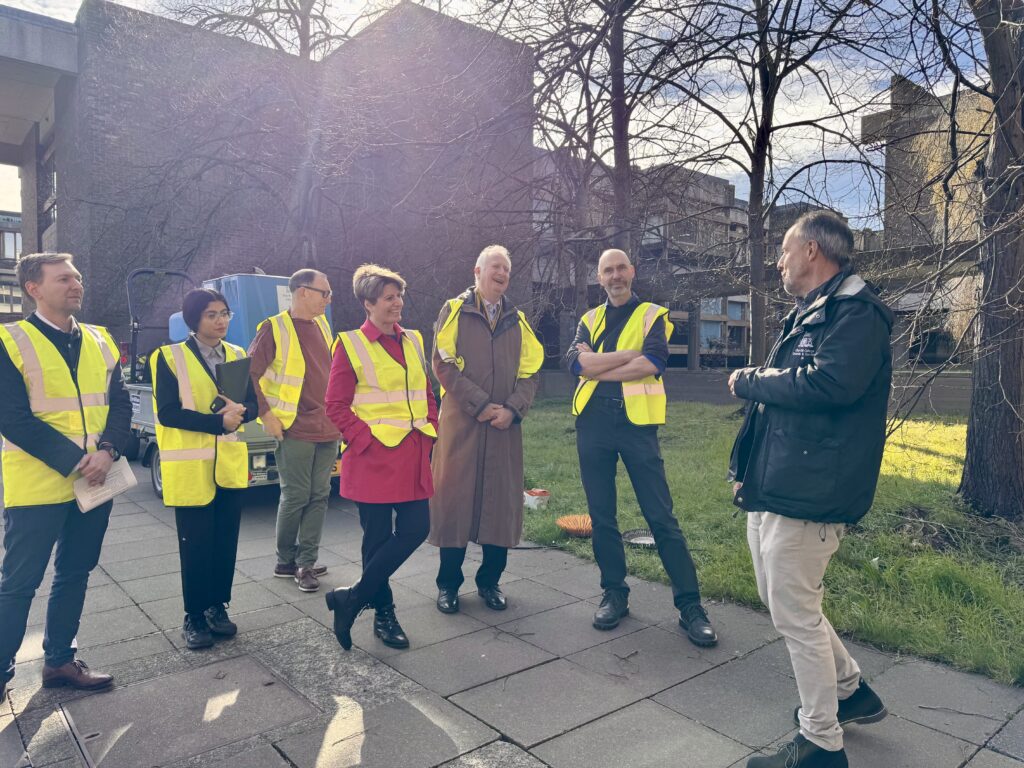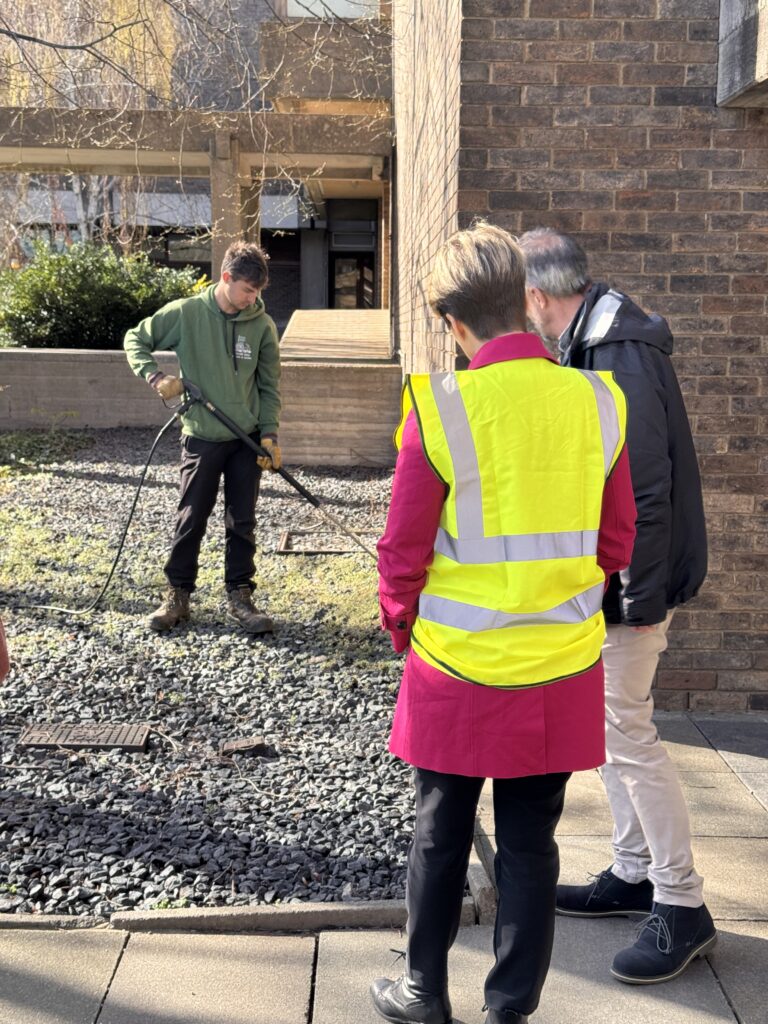

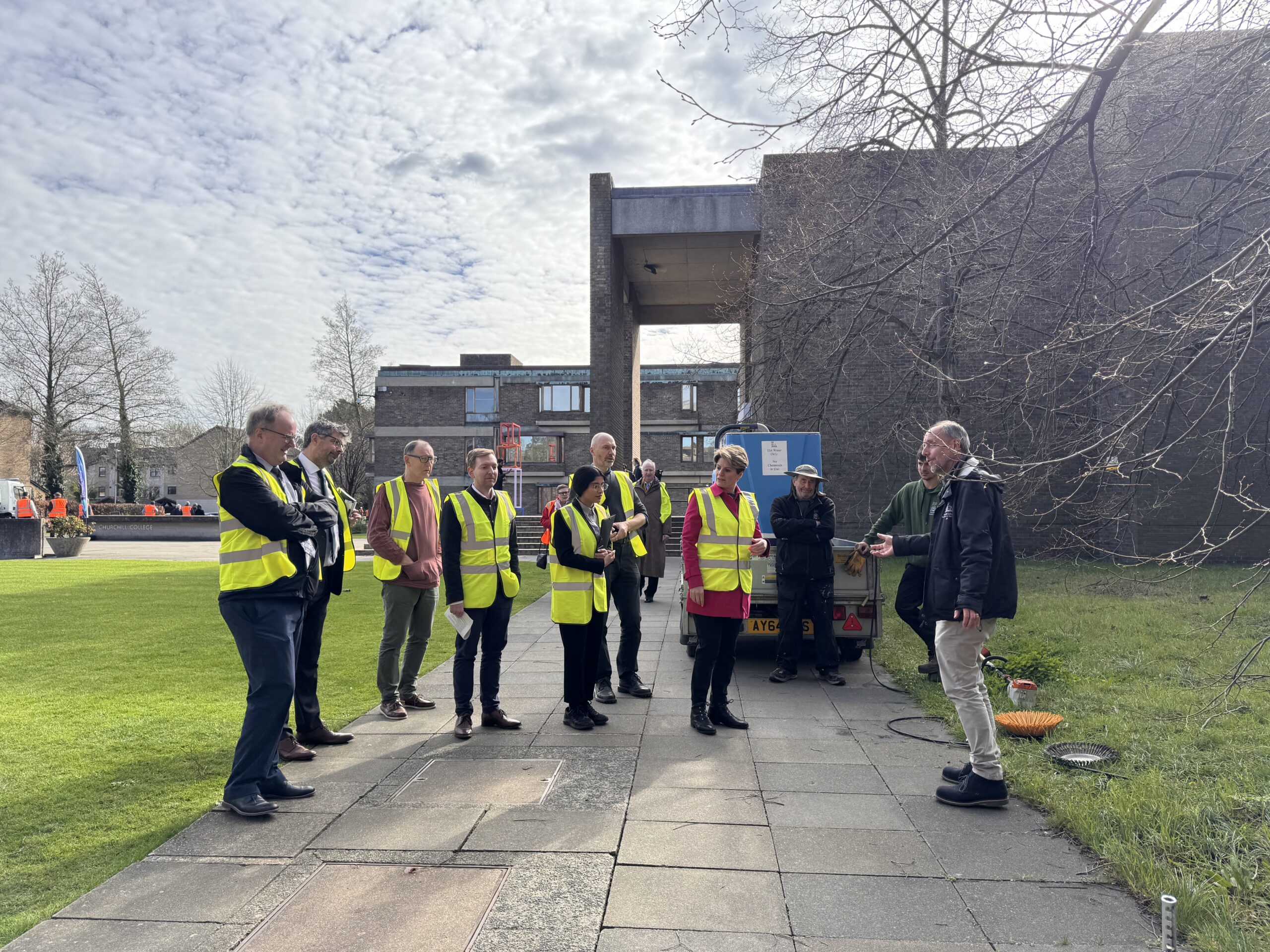
For more than a decade, we have managed the majority of our 50‑acre estate without herbicides – and last week that commitment was demonstrated to government. Emma Hardy MP, Minister for Water and Flooding, visited the College as part of a Cambridge City Council organised series of demonstrations for the Minister, joining us for a showcase of the hot water weed control method we first adopted in 2019.
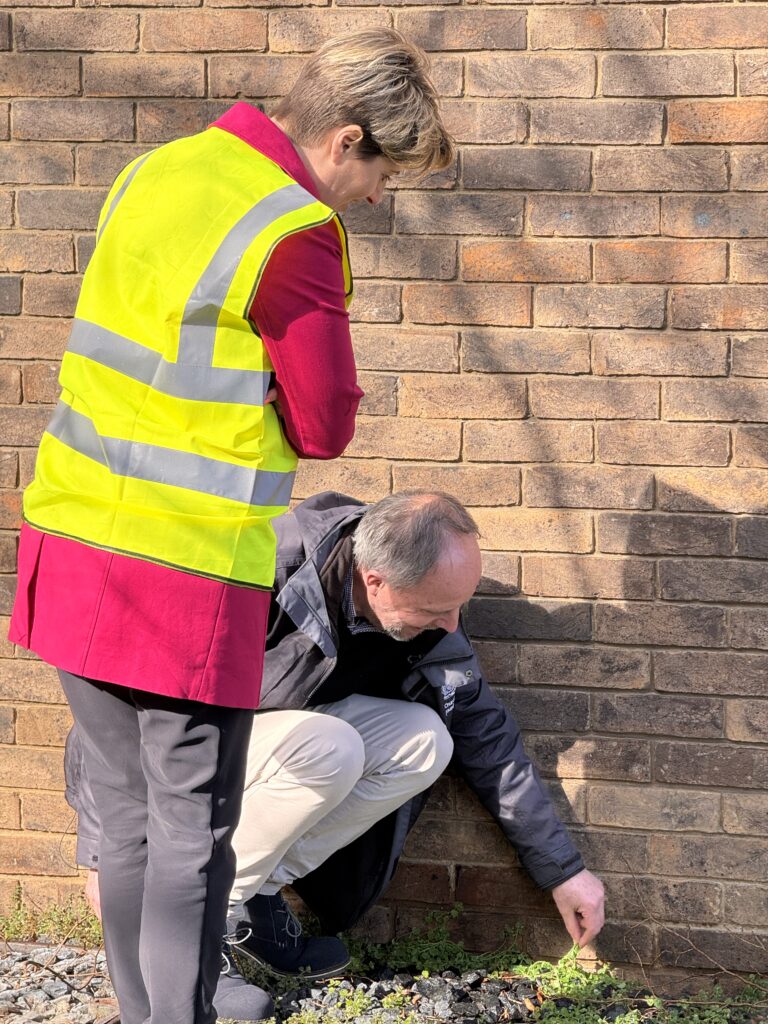
In a dedicated demonstration area where weeds had been cultivated for the occasion, we showed how near‑boiling water offers a highly effective alternative to chemical treatments – one that works, scales, and protects both people and the environment.
How it works
Near‑boiling water (98 degrees C) destroys a plant’s cell structure on contact, causing immediate death of the foliage. Annual and ephemeral weeds die completely after a single treatment. More established deep-rooted perennials often require repeat applications, but over time the ongoing maintenance becomes highly manageable. It is more labour‑intensive than spraying herbicides, but the advantages make it well worthwhile.
Benefits for people, wildlife and the environment
The impact on staff wellbeing has been clear. There is no need for extensive PPE – a particular relief in hot weather, when chemical protective clothing becomes genuinely oppressive – no concern about chemical exposure, and no anxiety about soil health afterwards. Visitors and members of the public benefit too: with no toxic chemicals being applied, there is no risk of accidental contact for anyone on or near the estate. The water returns to the ground at ambient temperature, with no chemical residue and no risk of run‑off into drains, water courses or planting beds.
Across the 50‑acre estate, herbicide use has been dramatically reduced. The method is now standard practice throughout our grounds, with the sole exception of the sports playing surfaces, where specialist turf management still requires it. However, this is only one application every 12 or 24 months.
This approach also supports our wider biodiversity commitments. We have moved away from the idea of a flawless monoculture lawn: we no longer treat our grass for broadleaf weeds, and we actively welcome daisies and other small plants that bring variety and ecological interest to the landscape. This has also helped to develop a more balanced ecosystem which has meant we don’t use pesticides either.
Sharing our learning
Having pioneered this approach over ten years ago, we were well placed to share what we have learned. There were many questions from our guests, and our Head of Grounds and Gardens, John Moore, provided detailed answers drawn from a decade of hands‑on experience.
John said: “We were delighted to help host this visit and to show our herbicide free garden maintenance work. After ten years using this method across a 50‑acre site, we know what works, the challenges and the difference it makes, both for the people doing the job and for the environment around them. By sharing that experience across institutions, we can all make a bigger impact.”