
Engineering
An amazing place for engineering
Studying engineering at Churchill College means your passion for creating and innovating becomes a key part of your everyday experience. While all engineering students share the same lectures and lab sessions, Churchill offers something extra, enhancing your studies with unique opportunities and a supportive community.
Engineering is about solving problems and designing processes to improve people’s lives and solve global challenges. From reservoirs to robots, aircraft to artificial hips, and microchips to mobile phones, engineers create a diverse array of products that make a real difference in the world. Explore this page to discover some of the exciting ways Churchill makes engineering truly special.
Entry Requirements
To apply to this course, you need to be taking the following subjects:
- A Level Mathematics, Physics, and Further Mathematics
- Higher Level Mathematics: Analysis and Approaches, and Physics
If you are not taking these qualifications (where appropriate) we will be unable to progress your application to Churchill College for Engineering.
For more information on this course, see the University course page: Engineering, BA (Hons) and MEng | Undergraduate Study
If you are taking other qualifications, please see the following University webpage for equivalent entry requirements: Check which qualifications we accept | Undergraduate Study
Admissions Assessment
All Engineering applicants are required to take the Engineering and Science Admissions Test (ESAT).
You must register for this in advance.
You can find more information about this assessment on the University webpage: Engineering and Science Admissions Test (ESAT) | Undergraduate Study
Written Work
Written work is not required for Engineering
Vibrant engineering community
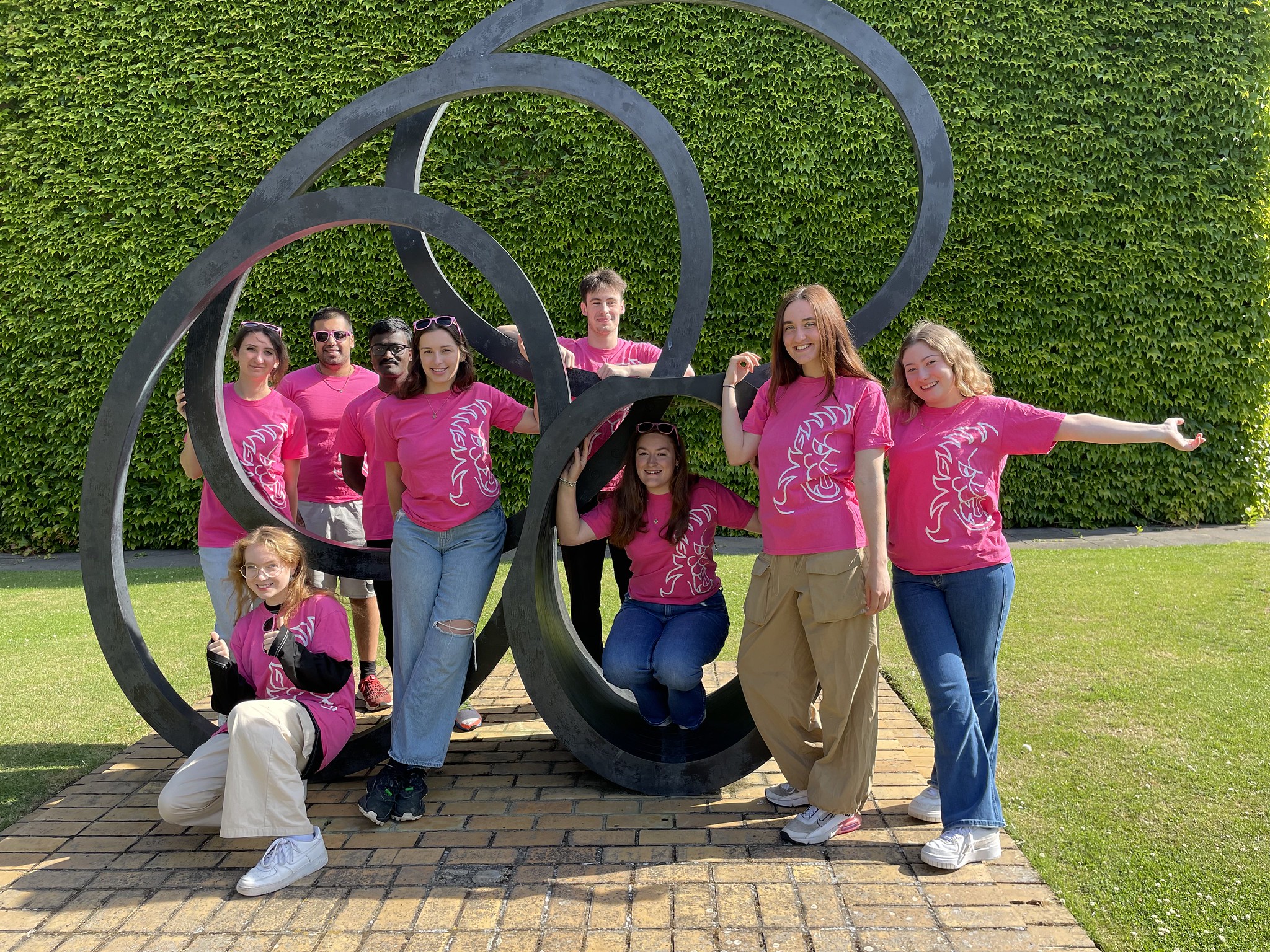
Churchill College is one of the Colleges with the most engineering students, so there’s always someone available to collaborate on lecture material or supervision work. Plus, regular, free social events throughout the year help build strong friendships and connections between engineers across all year groups, creating a supportive and tight-knit community.
ChuEng: Churchill College’s engineering student society, organises social and academic events, including a pub quiz, formal swaps to meet engineers from other colleges, and industry site visits.
Engineering dinners: Churchill’s All-Engineers’ Formal Dinners, held twice a year, are one of the most exciting traditions, bringing together the entire engineering community, from students (undergraduate and postgraduate) to academics, alumni, and industry insiders. These special evenings offer a unique chance to network, gain insight into diverse career paths, and make valuable connections with professionals who are shaping the future of engineering.

Space to innovate
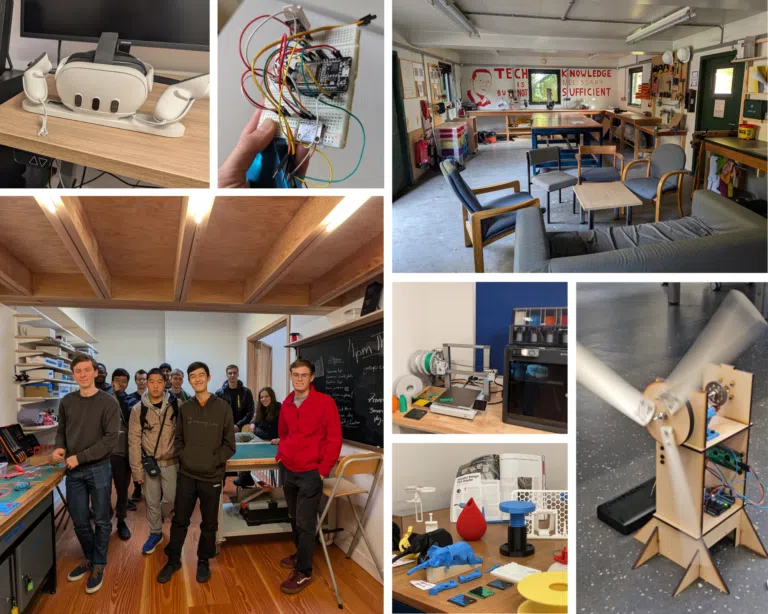
Churchill College is the only college with 2 dedicated makerspaces accessible to students. Here, you won’t just learn from lectures; you can get involved with real projects, learn technical skills and bring your ideas to life.
Bill Brown Creative Workshops: Newly opened in 2024. The only college with a dedicated workshop for 3D printers, laser cutters, Virtual Reality headsets, and much more! This is a great space for cross-disciplinary projects. Read more here.
Engineering shed: a student-led space for woodwork, metalwork and projects large and small.
World-class leadership training
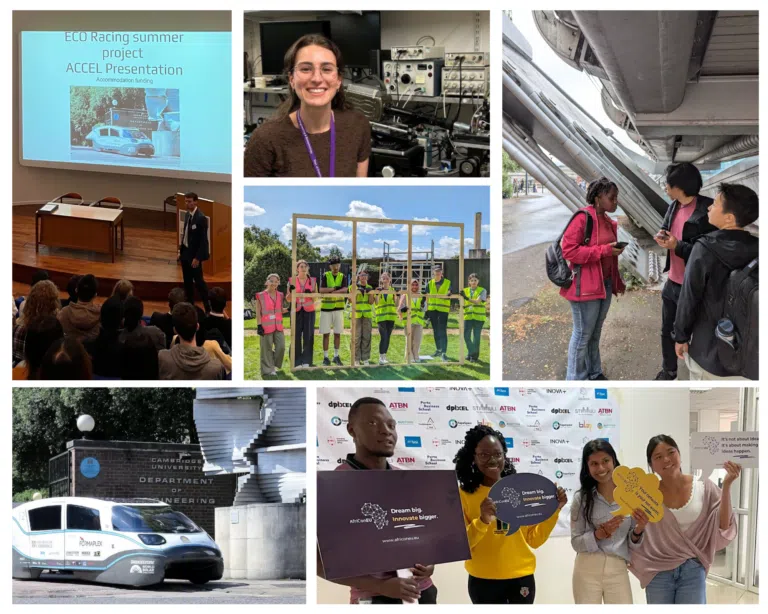
At Churchill, you’ll have the amazing opportunity to join ACCEL, a world-class leadership training programme exclusively for STEM students, offered in collaboration with the Møller Institute. Through this free programme, you’ll build confidence, learn how to manage your studies more effectively, and gain valuable skills that will set you up for success in your future career.
Internships
Here you’ll have the chance to take part in exclusive internship opportunities that broaden your horizons and let you put your learning into action.
These internships are often led by college fellows and many focus on outreach and sustainability, a key interest at Churchill.
In Summer 2023, eight Churchill students participated in fully-funded “Engineering a Better World Internships”, focusing on sustainable development. They collaborated in multicultural teams with local entrepreneurs across Africa to address real technical challenges in low- and middle-income countries, making a positive impact in communities while honing their skills in challenge-led innovation.
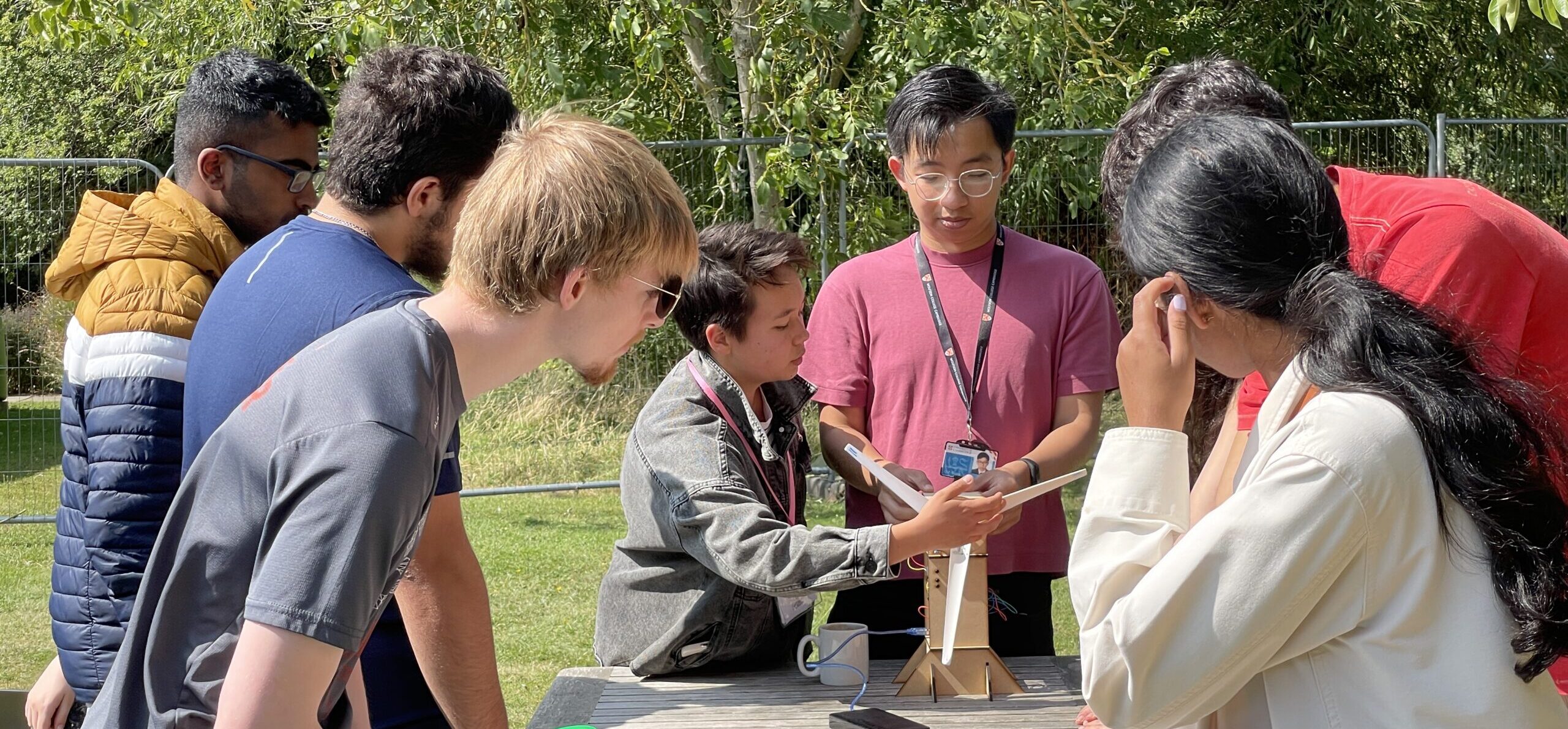
Other internships have involved designing and building a full-scale eco-shelter, smart sensors for environmental monitoring and a mini wind turbine!
Teaching, Directors of Studies & Fellows
At Churchill College, the engineering team is incredibly supportive and approachable, ensuring you make the most of your time here, whether it’s through your studies, exploring career opportunities, or engaging in extracurricular activities.
With the largest number of Engineering Fellows of any Cambridge College, you’ll have the chance to meet and learn from academics across all engineering disciplines, including civil, electrical, aerospace, manufacturing, and bioengineering. Additionally, our dedicated suite of rooms for Engineering teaching provides an ideal environment for collaboration and learning.
A few of the people you will meet are:

Professor Seb Savory
Director of Studies, Part I

Dr Alice Cicirello
Director of Studies, Part I

Dr Rachel Thorley
Fellow, Teaching & Outreach

Dr Christopher Hicks
Fellow, Teaching & Industry
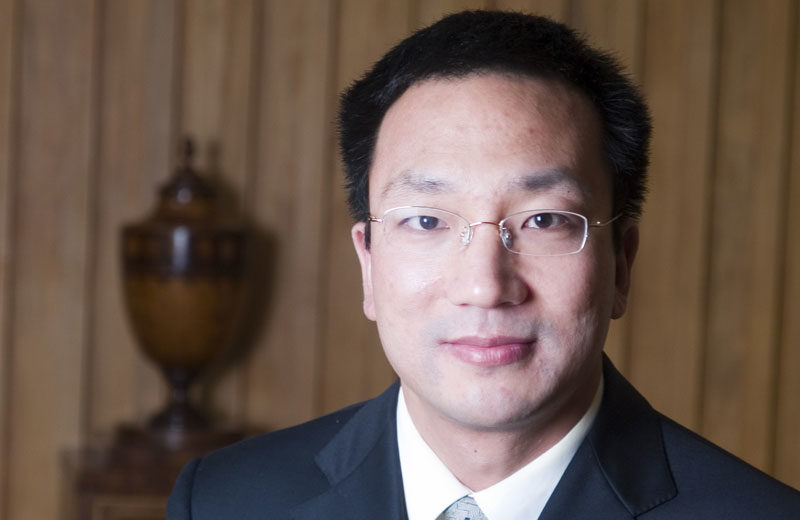
Professor Dongfang Liang
Director of Studies, Part II

Professor Tawfique Hasan
Director of Studies, Part II

Professor Ronan Daly
Director of Studies, Manufacturing & Engineering
Studying Engineering at Churchill College
The Cambridge Engineering course is designed to equip you with essential skills in analysis, design, and computing, which are at the heart of modern engineering. At the same time, it fosters creativity and problem-solving abilities, both of which are key to becoming a successful engineer.
Engineering is a diverse field, and professional engineers often tackle a wide range of challenges using their knowledge and experience. To prepare you for this, the Cambridge Engineering course keeps the first two years of study the same for all students, no matter what area of engineering you plan to focus on in later years.
This approach requires you to be flexible and open-minded, ready to adapt to new and unfamiliar problems. Since mathematics is the foundation that connects all aspects of engineering, strong mathematical skills are essential for success in this course.
Hands-on skills and creativity are also vital in engineering. Building models, creating prototypes, and conducting experiments are everyday tasks for many engineers. A natural curiosity about how things work will help you thrive in this field.
Full course details are provided on the Department’s Prospective Undergraduates and Applicant Information webpages, as well as the University’s Undergraduate Study webpage.
You may also be interested in: